 Unesco Chair in World #Food Systems
« La façon dont les hommes conçoivent la satisfaction de leurs besoins alimentaires ne saurait se réduire à de strictes logiques utilitaires ou technologiques. L’alimentation a une fonction structurante de l’organisation sociale d’un groupe humain. Qu’il s’agisse des activités de production, de distribution, de préparation, de consommation, elle est un objet crucial du savoir socio-anthropologique. »
Home > Keywords > Date > Avant 2014
Avant 2014
Articles
-
 Sociologies de l’alimentation
27 octobre 2021, par Mathilde COUDRAY -
 Should we go “home” to eat ? : toward a reflexive politics of localism
3 novembre 2021, par Mathilde COUDRAY“Coming home to eat” [Nabhan, 2002. Coming Home to Eat : The Pleasures and Politics of Local Foods. Norton, New York] has become a clarion call among alternative food movement activists. Most food activist discourse makes a strong connection between the localization of food systems and the promotion of environmental sustainability and social justice. Much of the US academic literature on food systems echoes food activist rhetoric about alternative food systems as built on alternative social norms. New ways of thinking, the ethic of care, desire, realization, and vision become the explanatory factors in the creation of alternative food systems. In these norm-based explanations, the “Local” becomes the context in which this type of action works. In the European food system literature about local “value chains” and alternative food networks, localism becomes a way to maintain rural livelihoods. In both the US and European literatures on localism, the global becomes the universal logic of capitalism and the local the point of resistance to this global logic, a place where “embeddedness” can and does happen. Nevertheless, as other literatures outside of food studies show, the local is often a site of inequality and hegemonic domination. However, rather than declaim the “radical particularism” of localism, it is more productive to question an “unreflexive localism” and to forge localist alliances that pay attention to equality and social justice. The paper explores what that kind of localist politics might look like.
-
 The rise of supermarkets in Africa, Asia, and Latin America
26 octobre 2021, par Mathilde COUDRAYSupermarkets are traditionally viewed by development economists, policymakers, and practitioners as the rich world’s place to shop. The three regions discussed here have a great majority of the poor on the planet. But supermarkets are no longer just niche players for rich consumers in the capital cities of the countries in these regions. The rapid rise of supermarkets in these regions in the past five to ten years has transformed agrifood markets at different rates and depths across regions and countries. Many of those transformations present great challenges—even exclusion—for small farms, and small processing and distribution firms, but also potentially great opportunities. Development models, policies, and programs need to adapt to this radical change.
-
 Vers de nouvelles formes d’intermédiation entre producteurs et consommateurs ?
13 décembre 2012, par ClarisseAu milieu des années 2000, la population mondiale est devenue majoritairement urbaine. En 2050, plus des deux tiers des humains habiteront en ville.
-
 De la hausse des prix au retour du « productionnisme » agricole : les enjeux du sommet sur la sécurité alimentaire de juin 2008 à Rome
3 novembre 2021, par Mathilde COUDRAYEn mai 2007, la rumeur de la création d’un nouveau gouvernement français sans ministère de l’Agriculture courait. Celui-ci serait éventuellement relégué au rang de secrétariat d’État. Le rapport annuel de la Banque mondiale sur le développement dans le monde sortait six mois plus tard, consacré à l’agriculture. Il dénonçait l’abandon dont ce secteur avait fait l’objet depuis plus de vingt ans. La part consacrée au secteur agricole dans l’aide publique au développement était ainsi passée de 11,5 à 3,9 milliards de dollars entre 1987 et 2005. En moins d’un an, les manifestations populaires et les émeutes que la flambée des prix a provoquées auront réussi à bouleverser l’agenda politique international et à replacer l’agriculture dans les débats internationaux. Revenir sur cet emballement médiatique et tenter de prendre du recul sur l’enchaînement des événements ne vise pas à dénoncer cette nouvelle priorité. Mais ce retour de balancier porte en lui de nouveaux risques qui pourraient bien conduire, si l’on n’y prend garde, à provoquer demain d’autres crises alimentaires.
-
 Small farm production and the standardization of tropical products
26 octobre 2021, par Mathilde COUDRAYThis paper explores the historical relations between labour organization and product qualification in the production of tropical agricultural exports. In supplying international markets for tropical products, peasant farming emerged as the norm for labour organization after the First World War, competing with the large plantations and different systems of forced labour. During the same period, national standards became the dominant tool for product qualification of commodities traded on the global agricultural markets. These standards allow the creation of futures markets and the emergence of traders, instead of auction markets and commission merchants : two changes that were the basis of the subsequent international marketing of peasant-produced commodities. The last part of the paper considers the potential consequences of the current erosion of standards for the position of peasants in tropical export crop cultivation.
-
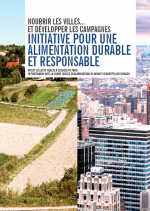 Peut-on nourrir durablement les villes au Nord et au Sud ?
13 décembre 2012, par ClarisseLes exigences d’un développement durable : quelles relations entre la Ville et son hinterland nourricier ? La reconquête des marchés urbains africains avec les produits de l’agriculture familiale locale. Le rôle des politiques publiques pour améliorer la sécurité alimentaire : l’exemple du programme brésilien des cantines scolaires.
-
 Sécurité alimentaire : un objectif hors d’atteinte ?
27 janvier 2012, par ClarisseBeaucoup reconnaissent aujourd’hui que l’objectif du Millénaire pour le développement des Nations unies, qui visait à réduire de moitié entre 1990 et 2015 la proportion de personnes sous-alimentées dans le monde, est désormais hors de portée.
-
 Le système alimentaire du grand Toronto : pionnier de la durabilité
5 janvier 2018, par RoxaneUn des défis majeurs à venir sera de parvenir à nourrir durablement les urbains, car dans le même temps, la communauté scientifique s’accorde pour pronostiquer un avenir fait de risques de pénuries de ressources naturelles non renouvelables, liés notamment à l’urbanisation galopante.
-
 The practice and politics of food system localization
3 novembre 2021, par Mathilde COUDRAYAs an apparent counterpoint to globalization, food system localization is often assumed to be a good, progressive and desirable process. Such thinking rests on a local–global binary that merits closer scrutiny. This paper examines the social construction of “local”, by analyzing the practice and politics of food system localization efforts in Iowa, USA. It argues that desirable social or environmental outcomes may not always map neatly onto the spatial content of “local”, which itself involves the social construction of scale. These contradictions in turn relate to differing political inflections discernible in food system localization. Localization can be approached defensively, emphasizing the boundaries and distinctions between a culturally and socially homogeneous locality needing protection from non-local “others”. But through the experience of new social and gustatory exchanges, localization can also promote increased receptivity to difference and diversity. More emergent, fluid and inclusive notions of the “local”, however, may challenge the very project of crafting and maintaining distinctive food identities for local places. These themes are explored through a case study of food system localization efforts and activities in Iowa, an American state that has been a stronghold of conventional commodity agriculture. Demographic and agricultural histories are drawn on to understand recent food system localization practice that has come to emphasize a definition of “local” that coincides with sub-national state boundaries. The emergence and popularization of the “Iowa-grown banquet meal” and the shifting meaning of “local Iowa food” further illustrate the potential tension between defensiveness and diversity in food system localization.