 Chaire UNESCO Alimentations du monde
With a population of 2.5 million people, the city of Belo Horizonte, Brazil, is a world pioneer in tackling food consumption, distribution and production as components of an integrated urban policy for food security. The paper gives a description of the main programmes and features of this policy arguing that over 15 years the city and its Municipal Secretariat for Food Policy and Supply have built a particular alternative food system. Marked by the comprehensive scope of its programmes ; its urban/rural focus ; the flexibility of the initiatives and, above all, by its commitment to social justice and equitable access to food, Belo Horizonte has developed a distinct mode of governance for food security. The unique ‘alterity’ of this food system is set further apart from those being attempted in Europe and in North America because it is government-driven. The paper discusses its strengths and current challenges.
Accueil > Mots-clés > Source > Ressources hors Chaire
Ressources hors Chaire
Articles
-
 Urban governance for food security : the alternative food system in Belo Horizonte
23 novembre 2021, par Mathilde COUDRAY -
 Comment la personne se construit en mangeant
26 octobre 2021, par Mathilde COUDRAYL’évolution de la sensation gustative, son rôle, sa place dans la genèse de la personne ainsi que dans l’établissement des conduites alimentaires normales ou déviantes, constituent un domaine dans lequel nos connaissances sont nombreuses, foisonnantes, mais aussi mal organisée, et, sur certains plans, étrangement lacunaires.
-
 Beacons of hope : accelerating transformations to sustainable food systems
23 novembre 2021, par Mathilde COUDRAYThis report examines 21 initiatives that are working to achieve sustainable, equitable, and secure food systems.
-
 Recycling, recovering and preventing “food waste” : competing solutions for food systems sustainability in the United States and France
3 novembre 2021, par Mathilde COUDRAYDrawing on a distinction between “weak” and “strong” sustainability, this paper argues that “strong” prevention based on holistic changes in the food system is the most sustainable solution to food surplus and waste. It suggests that academics focus on strong food surplus prevention, but also that advocates encourage government and corporate actors to differentiate between weak and strong actions to diffuse strong sustainability across organizations and countries.
-
 Physiologie du goût, ou Méditations de gastronomie transcendante
26 octobre 2021, par Mathilde COUDRAYLa Physiologie du goût est un recueil de mémoires. Mémoires d’humour, dans le ton héroï-comique, ou comment traiter de matières familières avec un rien de noblesse, un zeste de pompe ou de solennité. Cela pourrait lasser, si tout ne baignait dans la modestie et la gaieté. Brillat-Savarin est l’auteur le plus aimable qui soit. Mais il est question de cuisine. Brillat-Savarin (1755-1826) inaugure avec génie cette intellectualisation de la gastronomie qui ne devait pas cesser jusqu’à nos jours.
Il est témoin de l’époque où s’impose le restaurant, lieu pour manger, au détriment de l’auberge, refuge du voyageur sans feu ni lieu, où l’on ne faisait guère que boire et se nourrir. La cuisine se professionnalise et toute profession suscite discours ; se mettre à table est affaire de langage. Au-delà du besoin de manger, le plaisir de la table est comme une mise en scène : le luxe du désir. La nourriture désirée est une sorte de cérémonie ethnographique par laquelle l’homme célèbre son pouvoir, sa liberté de brûler son énergie "pour rien".
"En ce sens, dit Roland Barthes, le livre de Brillat-Savarin est de bout en bout le livre du "proprement humain", car c’est le désir (en ce qu’il se parle) qui distingue l’homme". (présentation de l’édition parue en 2017 chez Flammarion) -
 Cause Animale, Cause Du Capital
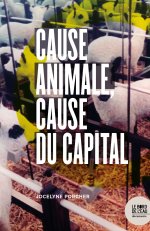
3 novembre 2021, par Mathilde COUDRAYPour le bien des animaux, celui de la planète et pour préserver notre santé, il faudrait de toute urgence renoncer à l’alimentation carnée voire à tous les produits animaux et, en clôturant dix mille ans de vie commune avec les vaches et les brebis, librement consentir à une agriculture sans élevage. Après des décennies de silence médiatique et politique sur la violence industrielle contre les animaux, pourquoi cette soudaine prise de conscience ?
C’est en reprenant le fil de l’industrialisation de l’élevage depuis le XIXe siècle et ses liens historiques avec la « cause animale » que l’on peut comprendre la situation actuelle et le développement des start-up de la « viande propre », amie des animaux et des milliardaires. La science et l’industrie, aujourd’hui comme hier, concoctent pour nous « un monde meilleur ». Sommes-nous bien sûrs qu’il correspond à nos désirs ?
-
 Understanding Lived Experience of Food Environments to Inform Policy : An Overview of Research Methods
10 novembre 2021, par Mathilde COUDRAYWith poor diets being the leading cause of ill-health in the world today, the imperative to explore how to leverage food systems for better diets has never been greater. Significant attention has been placed on how to improve one particular component of the food system : food environments. Food environments comprise the foods available to people in their surroundings as they go about their everyday lives and the nutritional quality, safety, price, convenience, labelling and promotion of these foods (FAO, 2016).
-
 The global distribution of acute unintentional pesticide poisoning : estimations based on a systematic review
26 octobre 2021, par Mathilde COUDRAYHuman poisoning by pesticides has long been seen as a severe public health problem. As early as 1990, a task force of the World Health Organization (WHO) estimated that about one million unintentional pesticide poisonings occur annually, leading to approximately 20,000 deaths. Thirty years on there is no up-to-date picture of global pesticide poisoning despite an increase in global pesticide use. Our aim was to systematically review the prevalence of unintentional, acute pesticide poisoning (UAPP), and to estimate the annual global number of UAPP.
We carried out a systematic review of the scientific literature published between 2006 and 2018, supplemented by mortality data from WHO. We extracted data from 157 publications and the WHO cause-of-death database, then performed country-wise synopses, and arrived at annual numbers of national UAPP. World-wide UAPP was estimated based on national figures and population data for regions defined by the Food and Agriculture Organization (FAO). -
 Food environments and EU Food Policy
28 June 2022, by Mathilde COUDRAYThe aim of this policy brief is to further sharpen understanding about food environments and what a ‘food environment approach’ entails for EU food policy and the transition to sustainable food systems.
-
 An emerging user-led participatory methodology : Mapping impact pathways of urban food system sustainability innovations
23 novembre 2021, par Mathilde COUDRAYThis chapter presents the general framework for the URBAL project as well as the main interwoven considerations and approaches that are the backbone of the methodology. Please note that this is an ongoing project and that it has evolved since the chapter has been written. We will point out some changes in the methodology as the chapter proceeds